
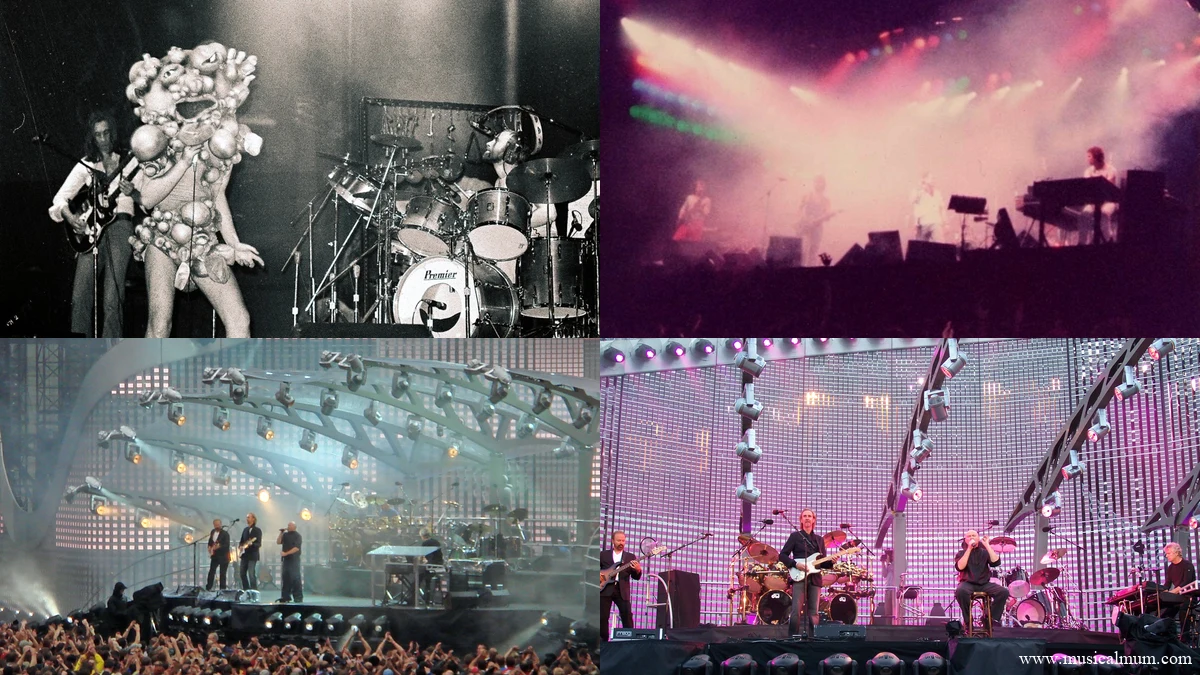
Start with “Firth of Fifth” to hear Genesis stretch a theme across a long arrangement, “Turn It On Again” for the point where prog meets pop, and “Land of Confusion” for the big 1980s sound.
These 20 Genesis songs follow the band from Peter Gabriel’s years as lead singer into the Phil Collins era. The early songs reward a little time. From Duke onward, there are more tracks you can get to know in one play.
1. “The Musical Box”
The quiet opening has the feel of a chamber piece, with delicate guitar under Peter Gabriel’s singing. Electric guitar and organ make the louder sections feel almost outsized when they arrive. Stay with it through the last climb in Gabriel’s voice.
2. “Watcher of the Skies”
Tony Banks’s Mellotron hangs in the air for a long time before the band locks into its clipped rhythm. That contrast is the pleasure of the opening. It’s the first track on Foxtrot and an easy place to start with early Genesis.
3. “Supper’s Ready”
The acoustic opening is quiet enough to make the later organ and drums feel enormous. Give the whole suite one uninterrupted listen. It keeps changing shape, and the closing section is more affecting if you’ve heard where it began.
4. “Firth of Fifth”
Tony Banks starts it alone at the piano. A melody that later passes through the flute comes back on Steve Hackett’s guitar, where the notes seem to hang longer. The way the band reuses the theme makes this one of the easier long tracks to follow.
5. “I Know What I Like (In Your Wardrobe)”
A buzzing sound and a spoken entrance set up the story of a groundskeeper. Once the chorus arrives, it sounds like a compact pop song. This is a good way into Selling England by the Pound if you usually prefer shorter tracks.
6. “The Cinema Show”
It starts with acoustic guitars and two characters getting ready for a night out. The long keyboard passage takes over without vocals, with drums and bass doing much of the work beneath it. The second half is a good test of whether you like the band’s instrumental side.
7. “The Lamb Lies Down on Broadway”
The piano figure gets you moving before Peter Gabriel starts sketching the streets of New York. The album has a sprawling story, but its title track works on its own as a brash, tightly played introduction.
8. “The Carpet Crawlers”
The keyboard arpeggio stays soft while the voices gradually gather around Gabriel. It’s a quiet point on The Lamb Lies Down on Broadway, and the original album recording gives it a different texture from the group’s 1999 remake.
9. “Dance on a Volcano”
Collins takes the lead vocal on the opening track of A Trick of the Tail. Sharp shifts in the instrumental parts still have the push and pull of early Genesis. Listen for how the guitar and keys accent the turns together.
10. “Entangled”
Acoustic guitars and close harmonies keep the first part of the song near a whisper. The long keyboard ending opens up the arrangement, with a high, wavering melody hanging over the chord changes.
11. “Ripples…”
The opening is soft and almost folky, and Collins lets the words move gently over the guitars. Halfway through, a long instrumental section gives the melody room to stretch. The band takes its time returning to the refrain.
12. “Afterglow”
The chords rise behind Collins, and the drums make the short closing track on Wind & Wuthering feel much bigger as it goes. Put it after a busy instrumental to hear how much the band can do with a slow build.
13. “Follow You Follow Me”
A small, circling guitar part sets the pace for a plain love song. The keyboard answers the melody, and the band leaves enough space for the chorus to feel easy to sing. It’s the short, warm closer on …And Then There Were Three….
14. “Turn It On Again”
The chorus is easy to latch on to, but the main riff turns over before you expect it to. Tap along for a verse to hear the irregular pattern. It’s one of the clearest examples of the band fitting an odd rhythm into a hit.
15. “Duchess”
The drum machine and soft keyboard sounds take their time before the full band comes in. Collins sings about a performer facing the loss of her audience. The big chorus gives her rise the scale that the opening deliberately holds back.
16. “Abacab”
The opening riff is clipped and punchy. The full album version leaves room for a long stretch after the last vocal, where the band plays with the riff and rhythm. Use that version if you want to hear more than the hook.
17. “Mama”
A hard drum-machine pattern and low keyboard sounds make the opening feel tense before Collins sings a word. His unnerving laugh raises the stakes. The big drums make the late arrival of the full band especially effective in the live performance here.
18. “That’s All”
A light piano figure carries a song about an argument that keeps coming around again. The tune stays bright even when Collins sounds exasperated. The guitar toward the end gives the band a short chance to stretch before it returns to the chorus.
19. “Invisible Touch”
The title song from Invisible Touch gets straight to its hook. Bright keys and tight guitar keep it moving between the vocal phrases. It’s short enough to play beside “Turn It On Again” and hear how the band sharpened its pop arrangements.
20. “Land of Confusion”
The bass and drums give this song an impatient drive. The famous puppet video is its own attraction, but the recording stands up without it. Listen to the shift in the middle, where the band lets the tension drop before bringing the rhythm back.
For a first session with the band, put “Supper’s Ready” and “Firth of Fifth” first, then try “Dance on a Volcano,” “Follow You Follow Me,” “Turn It On Again” and “Mama.” You can hear the arrangements get shorter while the band keeps its taste for unusual sounds and rhythms.
Image credits
Top left: Tony Morelli (CC BY-SA 2.0)
Top right: Valerio Ravaglia (CC BY-SA 3.0)
Bottom left: Michael Lowin (CC BY-SA 2.0 DE)


