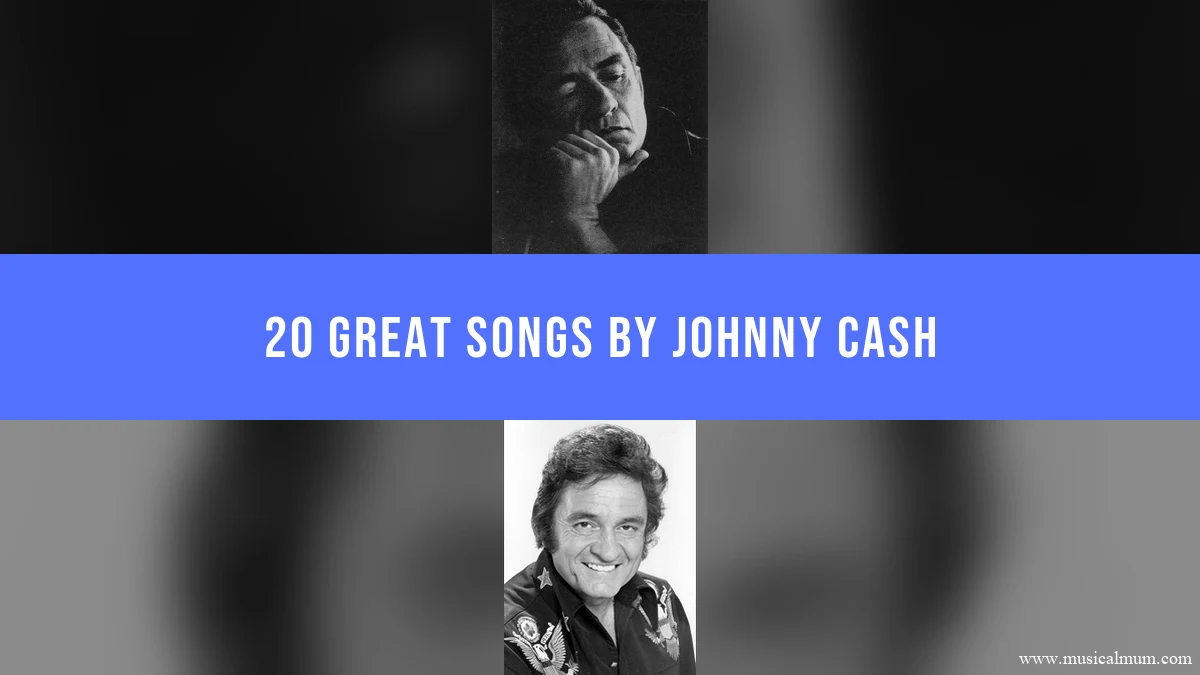
Johnny Cash could make a love song sound resolute, a travel song feel restless and a tall tale land with a perfectly straight face. These 20 great songs bring together his early country and rockabilly recordings, lively duets and some of his later, more reflective performances.
Contents
- 1. “I Walk the Line” by Johnny Cash
- 2. “Ring of Fire” by Johnny Cash
- 3. “Folsom Prison Blues” by Johnny Cash
- 4. “Hurt” by Johnny Cash
- 5. “Jackson” by Johnny Cash and June Carter Cash
- 6. “Get Rhythm” by Johnny Cash
- 7. “Sunday Morning Coming Down” by Johnny Cash
- 8. “Big River” by Johnny Cash
- 9. “Man in Black” by Johnny Cash
- 10. “One Piece at a Time” by Johnny Cash
- 11. “I Still Miss Someone” by Johnny Cash
- 12. “Hey, Porter” by Johnny Cash
- 13. “Cry! Cry! Cry!” by Johnny Cash
- 14. “Five Feet High and Rising” by Johnny Cash
- 15. “Don’t Take Your Guns to Town” by Johnny Cash
- 16. “I’ve Been Everywhere” by Johnny Cash
- 17. “Orange Blossom Special” by Johnny Cash
- 18. “If I Were a Carpenter” by Johnny Cash and June Carter Cash
- 19. “The Ballad of Ira Hayes” by Johnny Cash
- 20. “We’ll Meet Again” by Johnny Cash
1. “I Walk the Line” by Johnny Cash
The steady bass and clipped guitar give this promise of faithfulness its nervous energy. Cash sounds determined to stay dependable, with the low humming between phrases adding a particularly recognizable touch.
It is a good starting point for his early sound: a compact arrangement, a strong melody and a voice that needs little decoration.
2. “Ring of Fire” by Johnny Cash
Bright trumpets announce “Ring of Fire” before Cash describes love as something powerful enough to overwhelm him. The buoyant accompaniment keeps the song moving, even when the imagery suggests that falling in love can be unsettling.
Its short, repeating chorus makes this an easy choice for a singalong. June Carter and Merle Kilgore wrote the song, and Cash’s recording gives it a wonderfully bold setting.
3. “Folsom Prison Blues” by Johnny Cash
A passing train becomes the sound of everything the imprisoned narrator cannot reach. The bouncing guitar rhythm carries the story along while Cash’s low voice keeps its regret close to the surface.
The contrast between that lively backing and the confined narrator makes the recording memorable. It introduces the storytelling side of Cash without needing a complicated arrangement.
4. “Hurt” by Johnny Cash
Cash’s version of the Nine Inch Nails song brings a worn, exposed voice to a reflection on regret. The sparse opening leaves room for small hesitations, and the accompaniment grows heavier as the song continues.
The official video pairs his later performance with images from earlier in his life. It is an emotional choice for a quiet listen, with a much darker mood than his lively early singles.
5. “Jackson” by Johnny Cash and June Carter Cash
Cash and June Carter trade teasing challenges in “Jackson,” turning an argument between partners into a spirited duet. Their voices have enough bite to sell the disagreement, but their timing keeps the exchange playful.
The quick replies are the attraction here. This is a lively change of pace after Cash’s more solitary songs, especially for listeners who enjoy hearing two singers answer each other.
6. “Get Rhythm” by Johnny Cash
A shoeshine boy’s cheerful approach to work becomes the spark for this brisk, rockabilly-flavored song. The guitar snaps against the rhythm while Cash delivers the advice with an easy grin in his voice.
“Get Rhythm” is one of the best picks here when you want something upbeat. Its simple encouragement fits the light, springy sound without turning into a lecture.
7. “Sunday Morning Coming Down” by Johnny Cash
Cash sings Kris Kristofferson’s song as a slow walk through a lonely Sunday. Ordinary sounds and smells bring the narrator’s isolation into focus, while the unhurried melody leaves space for each detail.
The performance has a conversational quality that suits the writing. Choose this one for Cash’s ability to make a small scene feel personal, even when he is singing someone else’s story.
8. “Big River” by Johnny Cash
“Big River” chases a lost love from place to place with a rhythm that hardly pauses for breath. Cash’s clipped delivery and the bright guitar keep the pursuit moving, even as the narrator’s prospects get worse.
The river imagery gives the song plenty of scale, but the performance stays lean. It is an excellent companion to “Get Rhythm” when you want his faster early recordings.
9. “Man in Black” by Johnny Cash
Cash explains his dark stage clothes through the people whose difficulties he wants listeners to remember. The song moves from personal appearance toward concern for those living with hardship or being overlooked.
His delivery is measured and direct, with the words taking priority over instrumental flourishes. This is a useful next listen if you know the nickname but have never heard the song behind it.
10. “One Piece at a Time” by Johnny Cash
An assembly-line worker dreams of owning a luxury car and comes up with an increasingly impractical way to build one. Cash draws out the details with a straight-faced delivery that makes the mismatched result even funnier.
The spoken passages give the story room to unfold. It is a good reminder of how entertaining Cash could be when he let a tall tale run to its unlikely conclusion.
11. “I Still Miss Someone” by Johnny Cash
A familiar season and the sight of other couples bring an old relationship back into view. Cash keeps his singing gentle, with the plain melody letting the loneliness settle in gradually.
There is little drama in the arrangement, which suits a song about carrying an absence through everyday life. Try this alongside his louder hits to hear how effective he could be at a lower volume.
12. “Hey, Porter” by Johnny Cash
The passenger in “Hey, Porter” can barely contain his excitement about returning home. His repeated questions make the train ride feel increasingly urgent, and the chugging accompaniment gives those questions a natural setting.
Cash’s enthusiasm carries the song. It is a warmer travel story than “Folsom Prison Blues,” with the journey bringing him closer to a place he wants to be.
13. “Cry! Cry! Cry!” by Johnny Cash
A hurt narrator predicts that an unreliable partner will eventually feel lonely too. Cash delivers the warning over a brisk rhythm, keeping the performance light on its feet despite the disappointment underneath.
The guitar answers his vocal in short phrases, leaving the chorus easy to pick up. This is a strong choice for the clean, economical sound of his early recordings.
14. “Five Feet High and Rising” by Johnny Cash
A family watches floodwater rise around its home, with each change in depth pushing the story forward. The question-and-answer pattern gives the song an immediate shape that is easy to follow.
Cash keeps the delivery brisk, but the practical worries give the scene weight. It is a compact example of how he could build a complete story from a few repeated details.
15. “Don’t Take Your Guns to Town” by Johnny Cash
A young man leaves home eager to prove himself and dismisses his mother’s warning. Cash tells the story patiently, allowing the listener to hear how pride and an impulsive decision lead him into trouble.
The repeated warning becomes more affecting as the narrative develops. This is one of the more serious selections here, best heard as a cautionary story rather than a celebration of bravado.
16. “I’ve Been Everywhere” by Johnny Cash
Cash rattles through a long run of place names with the confidence of a traveler who still has miles to cover. The quick rhythm makes the geography feel like part of the percussion.
His precise phrasing is the pleasure of this performance. It adds an energetic burst to a road-trip playlist, especially after one of the slower storytelling songs.
17. “Orange Blossom Special” by Johnny Cash
The harmonica takes on a train-like energy in Cash’s version of “Orange Blossom Special.” Short sung passages make room for the instrumental excitement, with the rhythm keeping everything rolling forward.
It is a particularly good pick for listeners who enjoy the railroad sounds running through his music. The instrumental breaks give this track a different shape from the more verse-led songs here.
18. “If I Were a Carpenter” by Johnny Cash and June Carter Cash
Cash and June Carter Cash turn Tim Hardin’s song into a gentle exchange about commitment. Their contrasting voices make the questions and reassurances sound like a conversation between two people who know each other well.
The restrained backing leaves their harmonies clear. For a softer duet than “Jackson,” this is an appealing choice, with affection replacing the earlier song’s teasing competition.
19. “The Ballad of Ira Hayes” by Johnny Cash
Cash tells the story of Ira Hayes, the Native American Marine remembered for the Iwo Jima flag raising, and the difficulties he faced afterward. The steady delivery makes the gap between public recognition and personal hardship hard to miss.
The song’s seriousness comes from following one person through that change. Cash gives the narrative room to speak without crowding it with a showy vocal performance.
20. “We’ll Meet Again” by Johnny Cash
Cash closes this selection with a familiar promise of reunion. His weathered voice brings tenderness to the melody, while the fuller group singing gives the recording the warmth of people joining together.
From the later album American IV: The Man Comes Around, it makes a gentle companion to “Hurt.” The two recordings show different ways a simple song can carry memories of a long life.
Featured Image Credits (Top): Joel Baldwin.
Featured Image Credits (Bottom): CBS Television.