Music is food for the soul! And there’s no better way for your little one to start their musical journey than with a piano. But with so many options out there, it can be overwhelming. That’s why I’ve rounded up 10 pianos and keyboards for kids, from musical toys to instruments for first lessons.
My main recommended digital piano is the Alesis Recital Pro. Its full-size, hammer-action keys make it a suitable option for a child starting piano lessons.
As the second recommended portable keyboard, I suggest the Casio Mini Keyboard SA-76. It is a lightweight and compact keyboard for exploring tunes, though its mini keys are different from those on a lesson piano.
The right choice depends on whether your child wants to explore sounds, learn simple songs, or begin piano lessons. The differences in key size and key action matter more than the number of built-in sounds.
Contents
- The 10 Best Piano Keyboards for Kids (2026)
- 1. Alesis Recital Pro
- 2. Casio Mini Keyboard SA-76
- 3. Yamaha P45 Digital Piano
- 4. KORG Tiny Piano
- 5. Alesis Melody Keyboard Piano Bundle
- 6. Yamaha NP12 Portable Keyboard
- 7. Melissa & Doug 30-Key Classic Grand Piano
- 8. RockJam 54-Key Keyboard Piano Bundle
- 9. VTech KidiStudio
- 10. Hamzer 61-Key Digital Piano Keyboard
- What is a Piano for Kids?
- Key Points to Consider When Choosing Piano for Kids
- Piano for Kids FAQs
- Verdict
The 10 Best Piano Keyboards for Kids (2026)

1. Alesis Recital Pro
When it comes to choosing a piano for your child, the Alesis Recital Pro is a fantastic option that ticks all the boxes. It has an appropriate size, touch response, and adjustable features to cater to a child's developing skills. Plus, educational features like lesson and record modes can help your child learn and grow musically.
A feature that I appreciate about the Alesis Recital Pro is its weighted keys, which provide a realistic touch and feel so that when your kids eventually perform on or transition to better pianos, they already have somewhat gained a feel for it. Those who have played this consider it good because it is simple to set up and play.
Overall, the Alesis Recital Pro represents an excellent investment in your child's musical learning and growth, and one that is sure to inspire and motivate them for years to come.
For lessons, the useful distinction is its 88 full-size hammer-action keys, rather than simply having many sounds. Lesson Mode gives a teacher and student matching note ranges to practise together. The original Recital Pro needs a separately purchased sustain pedal; do not assume the differently equipped Recital Pro MKII has the same package contents.
Pros
- High-quality sound library
- Touch-sensitive keys
- Has a Display
- Can be used as a MIDI controller
- Weighted keys
Cons
- Sustain pedal not included
2. Casio Mini Keyboard SA-76
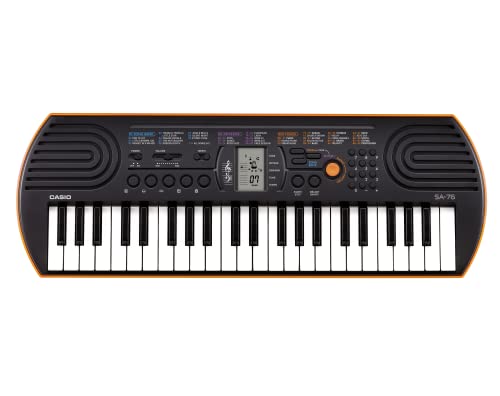
If you're in search of a piano for kids, the Casio SA-76 44-Key Mini Personal Keyboard is an excellent option to consider. It features mini-size keys that are perfect for those with smaller hands, making it easy for children to learn and play the instrument.
The Casio SA-76 44-Key Mini Personal Keyboard has a user-friendly layout, which includes well-labeled buttons and a display that makes it easy for children to operate. It also comes with a melody on/off lesson function and pre-installed practice songs that aid in the learning process, making it a highly recommended purchase for beginners.
In general, the Casio SA-76 keyboard is lightweight and easy to carry, which is perfect for your kids or musicians who travel frequently. It is also a reasonably priced option for entry-level musicians who want an easy keyboard.
Its 44 mini keys make it easy to carry, but they do not provide the spacing of a full-size keyboard. The fixed touch response also means pressing harder does not create the same dynamic control as a touch-sensitive lesson instrument. Choose it for exploring melodies, then consider the teacher's requirements before using it as the main practice keyboard.
Pros
- Various educational features
- Good sound quality for the price
- Portable and lightweight
- Convenient to move around
- Affordable
Cons
- No sustain pedal
- Keys are not touch sensitive
- Keys are not full width which may not be suitable for all kids
3. Yamaha P45 Digital Piano
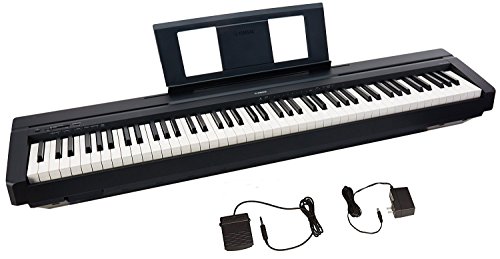
The Yamaha P45 is a popular choice among parents and teachers as it has excellent features and includes a music rest, power adapter, and footswitch in its standard package that enables your child to practice proper finger technique and get familiar with the instrument.
It features weighted keys, a great high-quality sound library, and a built-in speaker system. But what I appreciate the most about the Yamaha P45B is its digitally recorded tones from authentic Yamaha acoustic grand pianos, somewhat giving your child a taste of what it feels and sounds to play an authentic Yamaha grand piano. With its sound library, your child can explore different sounds ranging from traditional piano melodies to strings, organs, and other instruments.
Overall, the Yamaha P45B is an excellent piano for kids who want to learn, practice, and have fun exploring their musical skills.
The P-45 has 88 keys with Yamaha's Graded Hammer Standard action, so it is a lesson instrument rather than a miniature keyboard. A stand and bench still need to be planned separately unless the particular retailer's bundle includes them. Its simple controls suit families who want to focus on piano practice.
Pros
- Excellent sound quality
- Great value for the price
- Includes power adapter, sustain pedal, and music rest
- Weighted keys
- Durable and well-built
Cons
- No display

4. KORG Tiny Piano
The Korg TinyPiano is an excellent option if you want to delight your toddlers or kids with a compact piano. What I like about the Korg TinyPiano is the design, resembling a miniature upright piano, which can capture the attention and imagination of children.
It has built-in speakers that allow children to practice and learn independently, while the 25 pre-loaded sounds and 50 demo songs keep them entertained.
The Korg TinyPiano offers a fun playing experience without being overwhelming for young children with its 25 manageable keys, making it a great gift option for toddlers and young children who are just beginning to learn piano.
KORG describes the tinyPIANO as a digital toy piano. Its 25 mini keys suit musical play, but its compact note range does not replace a full-size instrument for progressing through piano lessons. Use the built-in songs for listening and exploration rather than expecting them to teach a complete course.
Pros
- Perfect size for toddlers
- Engaging design
- Comes with many sounds and demo songs
Cons
- Limited keys

5. Alesis Melody Keyboard Piano Bundle
For parents looking to nurture their child's musical abilities, the Alesis Melody 61 MKII portable keyboard is a great choice.
I really appreciate that it comes packaged with everything you need to get started - including a stand, microphone, bench, and headphones - making it a convenient purchase.
However, the drawback here is that they compromised a bit on the sound quality. But despite its decent sound quality, a lot of people would tend to agree that it's a good value for the price making the Alesis Melody 61 MKII a practical choice for parents looking for a basic piano bundle that is functional and affordable.
The bundle is convenient for trying songs, accompaniment, and singing, but its 61 piano-style keys should not be confused with the Recital Pro's hammer-action keyboard. Check the bench height and stand stability for your child. Choose from the package contents of the exact MKII offer rather than assuming other Melody versions include the same accessories.
Pros
- Easy to set up
- Comes with a lot of accessories
- Good quality for the price
Cons
- Sound quality is fairly average
6. Yamaha NP12 Portable Keyboard
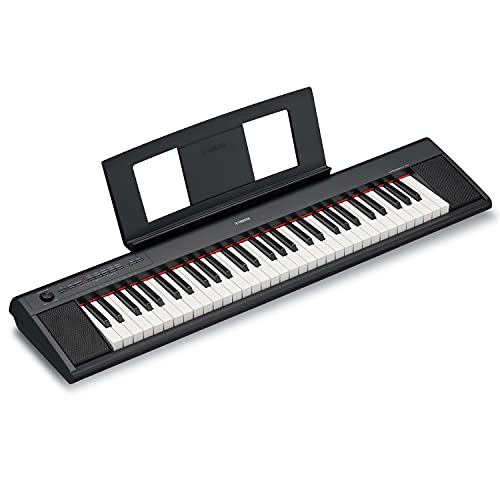
The Yamaha Piaggero NP12 is a lightweight 61-key keyboard for early pieces and portable practice. Its touch-sensitive keys respond to how firmly they are played, but do not have the hammer action of the P-45.
I appreciate the keyboard's durable and straightforward design, as well as the 10 tone options that are adequate and not overwhelming for children. Its USB connection can be used with compatible music software. Check the current software and device requirements rather than assuming an older Yamaha app is still available.
Like any other Yamaha product, the Yamaha Piaggero NP12 is an above-average keyboard that provides good value for your money, especially if you're looking for a sturdy and simple digital piano that serves its purpose well for your kids.
If piano lessons are the goal, ask whether the teacher is comfortable with a 61-key, unweighted practice instrument. It can cover many starting pieces, but wider repertoire may need more notes and a weighted action. Check the exact package for the power adapter before ordering.
Pros
- Great sound quality
- Excellent value for the price
- Simple and sleek design
- USB connection for compatible music software
- Durable
Cons
- Power adapter inclusion varies by region and package

7. Melissa & Doug 30-Key Classic Grand Piano
The Melissa & Doug Learn-to-Play Classic Grand Piano is an ideal toy for kids to play piano. I really appreciate that its 30 keys are hand-tuned and that they color-code and label the keys, making it easy for children to play and learn.
Some standout features that I like about this piano are its beautiful design and that it is made with high-quality materials, ensuring its sturdiness and durability. This piano is an excellent and enjoyable way to introduce children to music.
Treat this as a musical toy for exploring note patterns, not an acoustic grand piano in miniature. Its short keyboard and toy action serve a different purpose from weighted keys. A child moving into formal lessons will still need an appropriate practice instrument and comfortable seating.
Pros
- Color-coded and labeled keys make it easy for young kids to learn on
- Cute and esthetically pleasing
- Good quality
- Affordable
- Easy to assemble
- Good for developing motor control
Cons
- Limited keys
- Fairly average sound quality
8. RockJam 54-Key Keyboard Piano Bundle
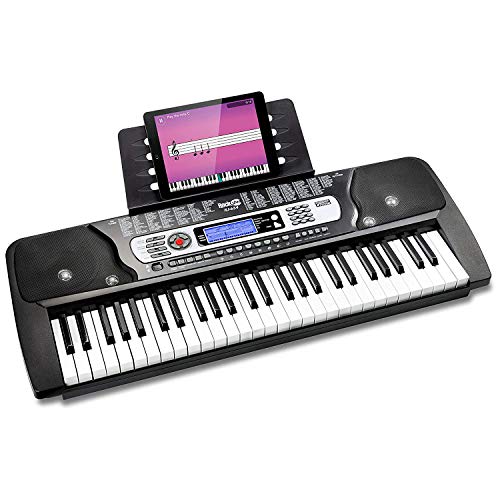
If you're considering a piano for your child and you’re on a budget, then the RockJam 54 Key Keyboard Piano is a great option to consider. I really like that the keyboard comes with note stickers for the keys, which help children identify keys when playing and help them learn. I also appreciate that some packages include access to Simply Piano lesson material. Check the offer's terms and duration rather than assuming a full ongoing app subscription.
Because of its lightweight design, it is easy to set up and use. While not of professional quality, this product is an affordable option for kids to practice on. In general, RockJam 54 Key Keyboard Piano is an economical, kid-friendly instrument that can serve as a great gift as well.
With 54 keys, this is best considered an introductory keyboard for simple tunes and accompaniment. Check with the teacher before choosing it for a piano course that expects a wider note range or weighted keys. Note stickers can help at first, but practising without relying on labels is also useful.
Pros
- Some packages include Simply Piano lesson access
- Great for kids
- Portable and easy to set up
Cons
- Fairly average sound quality
9. VTech KidiStudio
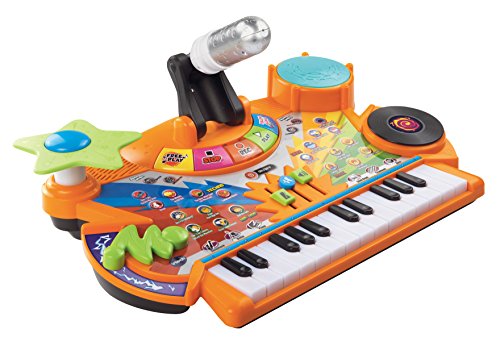
VTech KidiStudio is a reliable and entertaining toy for your child that can spark their interest in music.
The VTech KidiStudio is an affordable and captivating toy for kids to nurture their musical creativity. Its lively colors, tempo, and melody features add to the fun, as does the microphone and voice changer which can be engaging to children. Also, the ability to record and playback their own voice is a standout feature, allowing children to use their imagination and improve their musical skills.
If you want a piano toy that includes a variety of sounds, then the VTech KidiStudio is the best option for your kids.
VTech lists the Record & Learn KidiStudio for ages 3 to 6. The microphone, recording, and percussion controls encourage musical play; they do not make it a substitute for a full-size keyboard used in piano lessons.
Pros
- Durable construction
- Engaging features for kids
- Great gift option
Cons
- Not really designed to be a proper piano
10. Hamzer 61-Key Digital Piano Keyboard
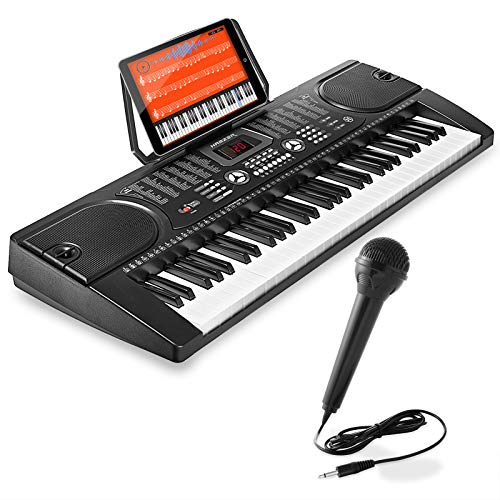
The Hamzer Electronic Keyboard is a good option for parents looking to buy a piano for their child. It comes with a microphone so kids can enjoy singing while making music.
The Hamzer Electronic Keyboard is designed with kids and beginners in mind, featuring clear stickers on the keys to aid in learning and improving note memory. In addition to its affordable price, it offers an impressive selection of 255 Timbres, 255 rhythms, 61 keyboard percussions, and 24 demonstration songs which I personally appreciate.
While it is definitely not of concert quality, it is a piano that children will love to play. If you are looking for a functional keyboard for kids, the Hamzer Electronic Keyboard is a great choice.
Hamzer sells several 61-key configurations, so check the exact model and included accessories. A large sound bank can make experimentation fun, but it does not establish that the keyboard has touch-sensitive or weighted keys. For lessons, the teacher's action and note-range requirements matter more than the number of rhythms.
Pros
- Lots of sound options
- Lightweight and portable
- Good value for the price
Cons
- Sound quality is not great
What is a Piano for Kids?
A piano for kids can mean a musical toy, a portable keyboard, or a full-size acoustic or digital piano. Mini keyboards can be fun for exploring melodies, but children taking piano lessons also use standard-size keys. A toy piano is not simply a smaller substitute for a lesson instrument.
Which type suits your child?
- Musical play: the KORG tinyPIANO, Melissa & Doug toy grand piano, and VTech KidiStudio are for exploring sounds and simple tunes. They serve a different purpose from a full-size lesson piano.
- First keyboard exploration: the Casio SA-76, Alesis Melody, RockJam, and Hamzer offer portable ways to try melodies and accompaniment. Check the exact model’s key size, touch response, and package contents.
- Beginning piano lessons: discuss the Alesis Recital Pro or Yamaha P-45 with the teacher if weighted, full-size keys are required. The Yamaha NP-12 is a lighter, touch-sensitive alternative, but it does not have hammer-action keys.
Key Points to Consider When Choosing Piano for Kids
It’s important to make sure that you’re purchasing a piano that will suit your child’s level and learning style, as well as your budget. Here are important considerations to keep in mind when buying a piano for kids:
Size
It’s crucial to select the correct size of instrument for a child, as it can impact their ability to learn. For lessons, think about key size, key action, and a comfortable seated position rather than choosing the number of keys from your child’s height. Luckily, there are smaller models available for children, such as the KORG Tiny Piano which is suitable for toddlers. For a child starting formal lessons, the full-size weighted keys of the Alesis Recital Pro and Yamaha P-45 are useful options to discuss with their teacher.
Key action and touch response
Touch sensitivity means that playing harder or softer changes the volume. Weighted or hammer-action keys also add resistance under the fingers. These are separate features: a touch-sensitive portable keyboard does not necessarily feel like an acoustic piano. For a child taking lessons, try the action and ask their teacher what is needed before choosing a mini keyboard.
Budget
Determine your budget before shopping for a piano. If you’re on a budget but still want a piano keyboard that has good quality, the RockJam 54-Key Keyboard Piano Bundle is a decent choice.
But if you have more money to spare and want a higher-end and long-lasting piano that closely resembles the real thing, then it’s worth considering investing in the Yamaha P45 Digital Piano. Keep in mind that higher prices do not always guarantee the higher quality, so research and compare prices to find the best value for your budget.
Brand
Ensure that the brand has a history of producing quality pianos and can offer maintenance and repair services if necessary. Established brands like Yamaha and Alesis, which includes the Yamaha P45 and Alesis Recital Pro, are some examples. Try out pianos from different brands to get a feel for their unique sound and features.
Durability
Choose a piano made with quality materials and construction to ensure durability. Look for warranties and guarantees to protect your gear in case things go wrong.
Accessories
Consider any necessary accessories, such as a bench, pedals, or covers, when selecting a piano. Some pianos may come with accessories included, while others may require additional purchases.
To ensure a child’s comfort while practicing, it’s necessary to purchase a piano bench or other accessories. If you prefer a starter package, the Alesis Melody 61 MKII bundle includes a stand, microphone, bench, and headphones. Check that the bench and stand adjust to a comfortable height; a bundle does not automatically cover a teacher’s requirements for weighted keys or pedal practice.
Generally, buying a piano for kids can be a daunting task, but keeping these considerations in mind will make it easier to choose the best piano suitable for your child.
Piano for Kids FAQs
What size piano should I get for my child?
For musical play, a small toy piano or mini keyboard can be enjoyable. For lessons, ask the teacher about full-size keys, touch response, and the repertoire your child will learn. A 61-key keyboard can handle many early pieces, while an 88-key weighted digital piano gives more room to progress without changing instruments.
Should I choose an acoustic or digital piano for my child?
A digital piano is useful when headphone practice, volume control, and limited space matter. An acoustic piano can also be a good lesson instrument if it is in good condition and kept tuned. Compare the key action, seating, upkeep, and your teacher’s requirements rather than assuming one type suits every child.
What is the best brand of piano for kids?
Brands such as Casio, Yamaha, Korg, and Roland are popular choices for piano keyboards for kids due to their durability, affordability, and range of features.
Verdict
Exploring pianos for kids is worth it as it can keep our children happy and motivated. These top 2 recommendations will help you find the perfect piano for your child, whether it’s for entertainment or learning purposes.
My main recommended digital piano is the Alesis Recital Pro. With its weighted keys, premium sound quality, and powerful educational features, the Recital Pro is a practical option for a child who needs a full-size instrument for lessons. Allow space for a stable stand and suitable seating, and budget for a sustain pedal.
For those looking for a more portable and affordable option, my second recommended product is the Casio Mini Keyboard SA-76. This keyboard packs a punch with its 44 keys. It is a mini keyboard for musical exploration and portable tune practice, rather than a like-for-like replacement for a full-size lesson piano.
In conclusion, whether you opt for the Alesis Recital Pro or the Casio SA-76, both pianos will provide an avenue for your child to express their creativity and hone their musical talents. So, let’s kick-start your little one’s musical journey!