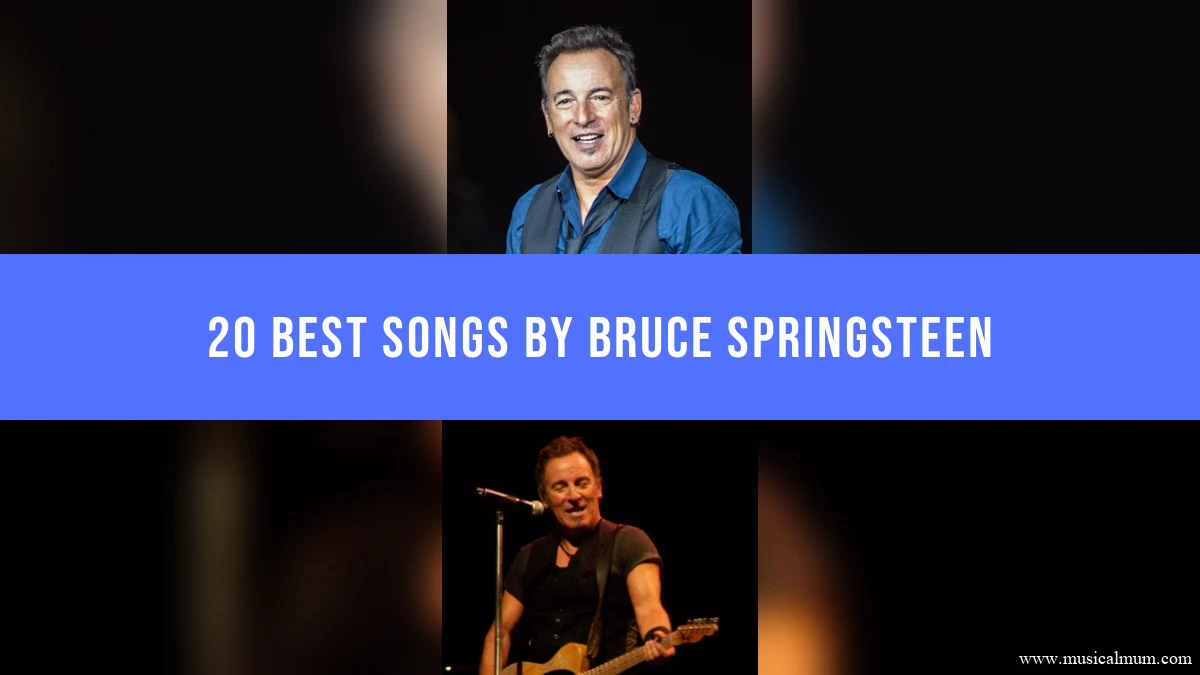
Bruce Springsteen’s best songs bring together restless rock anthems, detailed stories and quieter moments of reflection. “Born to Run,” “Dancing in the Dark” and “Thunder Road” are familiar starting points, but his catalogue rewards a closer listen. These 20 picks cover the big choruses, intimate performances and E Street Band arrangements that make his music so absorbing.
Contents
- 1. “Born to Run” by Bruce Springsteen
- 2. “Dancing in the Dark” by Bruce Springsteen
- 3. “Thunder Road” by Bruce Springsteen
- 4. “Badlands” by Bruce Springsteen
- 5. “The River” by Bruce Springsteen
- 6. “Hungry Heart” by Bruce Springsteen
- 7. “Atlantic City” by Bruce Springsteen
- 8. “Glory Days” by Bruce Springsteen
- 9. “Born in the U.S.A.” by Bruce Springsteen
- 10. “Tougher Than the Rest” by Bruce Springsteen
- 11. “Brilliant Disguise” by Bruce Springsteen
- 12. “I'm on Fire” by Bruce Springsteen
- 13. “Racing in the Street” by Bruce Springsteen
- 14. “The Promised Land” by Bruce Springsteen
- 15. “Streets of Philadelphia” by Bruce Springsteen
- 16. “My Hometown” by Bruce Springsteen
- 17. “No Surrender” by Bruce Springsteen
- 18. “The Rising” by Bruce Springsteen
- 19. “Jungleland” by Bruce Springsteen
- 20. “Letter to You” by Bruce Springsteen
- Conclusion
1. “Born to Run” by Bruce Springsteen
A rush of drums and guitars makes this song feel as if it is already halfway down the highway. Springsteen imagines two young people putting their hopes into an escape together, with enough urgency to make a familiar dream feel enormous. The saxophone and ringing guitar lines keep pushing toward that final release.
2. “Dancing in the Dark” by Bruce Springsteen
The bright synthesizer hook is easy to dance to, but the singer sounds restless and stuck. That combination gives the song its pull: the music supplies the energy that the narrator is struggling to find. Springsteen turns an ordinary bad night into a reason to get moving, even before anything has been resolved.
3. “Thunder Road” by Bruce Springsteen
Piano and harmonica open a small scene that gradually grows into a full-band invitation. The narrator offers companionship and a chance to leave, though neither person has a clear destination. Listen to how the arrangement opens up as his confidence grows; the instrumental finish lets the invitation hang in the air.
4. “Badlands” by Bruce Springsteen
This is Springsteen at his most determined, with a hard-driving rhythm and a chorus built for a room full of voices. The verses acknowledge frustration and disappointment without settling into resignation. The Tempe performance captures how the E Street Band can make that stubborn attitude feel like a shared effort.
5. “The River” by Bruce Springsteen
A youthful relationship runs into the responsibilities of marriage, work and an uncertain future. Springsteen tells the story through remembered places and ordinary details, which makes the disappointment feel close at hand. The harmonica gives the song a lonely edge, while the repeated return to the river connects the present with everything the couple once imagined.
6. “Hungry Heart” by Bruce Springsteen
The buoyant rhythm and easy chorus make this one sound welcoming from the first few bars. Underneath that cheerful surface is a narrator who has left home and is still searching for belonging. Springsteen lets the uncomfortable story and the friendly tune sit together, giving the song more to return to than its singalong hook.
7. “Atlantic City” by Bruce Springsteen
Acoustic guitar and a close, rough-edged vocal create a sense of trouble closing in. The narrator hopes a trip to Atlantic City might change his circumstances, even as his choices become harder to defend. Its spare sound makes every promise feel uncertain. This is a strong introduction to the quieter storytelling on Nebraska.
8. “Glory Days” by Bruce Springsteen
Old acquaintances trade stories about the moments when life seemed full of possibility. The band keeps the mood loose and lively, while the words reveal how easily those memories can become a place to hide. It is funny and affectionate, with a little unease underneath the familiar pleasure of looking back.
9. “Born in the U.S.A.” by Bruce Springsteen
The huge drum sound and repeated title can distract from the difficult story in the verses. Springsteen follows a Vietnam veteran who returns home to limited prospects and little support. Hearing that story alongside the forceful chorus gives the song its tension: the sound is commanding, while the character has very little power over his circumstances.
10. “Tougher Than the Rest” by Bruce Springsteen
A steady beat and broad keyboard chords give this love song a patient, grounded feel. The singer offers commitment with an awareness that both people have already been disappointed. His plain delivery makes the offer convincing, and the harmonica adds warmth without softening the determination behind it. It is one of his most direct songs about choosing to stay.
11. “Brilliant Disguise” by Bruce Springsteen
Doubt turns an apparently settled relationship into a series of unanswered questions. The singer studies his partner, then starts questioning the face he presents himself. A controlled arrangement leaves room for that uncertainty to build. The close-up official video suits the song, keeping attention on a performance that feels unusually exposed.
12. “I'm on Fire” by Bruce Springsteen
A hushed vocal, lightly picked guitar and restrained rhythm give this short track a restless nighttime atmosphere. Springsteen keeps the intensity low in volume but strong in feeling. The pauses matter as much as the melody, leaving the listener with a sense of longing that the song never tries to tidy up.
13. “Racing in the Street” by Bruce Springsteen
Cars offer the narrator a sense of purpose, but the story gradually reveals the strain around that escape. The piano-led arrangement gives him room to speak, then stretches the feeling beyond the last verse. In the Agora live recording, the unhurried instrumental passage is worth staying with; the band allows the sadness to settle rather than rushing toward a finish.
14. “The Promised Land” by Bruce Springsteen
Harmonica announces a song about trying to hold on to self-belief when work and daily pressure wear it down. Springsteen sings with mounting insistence, and the band answers with a firm, forward rhythm. The chorus sounds hopeful because the verses have already made clear how much effort that hope requires.
15. “Streets of Philadelphia” by Bruce Springsteen
A soft beat and subdued keyboard sound leave plenty of space around Springsteen’s voice. The narrator describes isolation and physical frailty with very little ornament. That restraint makes the song moving: it asks you to remain close to someone who feels increasingly distant from the people and places around him.
16. “My Hometown” by Bruce Springsteen
A childhood ride with a father becomes the starting point for a story about a changing community. Springsteen follows the town through social tension and lost work, then returns to the relationship between a parent and child. The gentle pace gives those memories weight without turning the place into a simple picture of better days.
17. “No Surrender” by Bruce Springsteen
Friendship and rock music become a promise to keep going in this brisk, guitar-driven song. Springsteen looks back at youthful conviction while trying to carry some of it into adulthood. The sturdy backbeat and shared vocals make it feel companionable, as though the promise matters most because someone else remembers making it too.
18. “The Rising” by Bruce Springsteen
Springsteen brings grief and hope into the same song, using a firefighter’s perspective and images of loved ones to make a public tragedy feel personal. The repeated chorus opens the music outward, and the guitars give it strength without erasing the sadness. Its emotional force comes from allowing remembrance and renewal to happen together.
19. “Jungleland” by Bruce Springsteen
Piano and violin introduce a long, dramatic street story with characters who seem to arrive from every corner of the city. The arrangement shifts between quiet narration and full-band surges. Clarence Clemons’s extended saxophone passage provides the emotional center, expressing a tenderness that the crowded, troubled scenes around it rarely allow.
20. “Letter to You” by Bruce Springsteen
The sound of the E Street Band feels open and familiar here, with ringing guitars supporting a direct message of connection. Springsteen treats writing as a way to pass on what he has carried through life. The song makes a fitting finish to this selection because it places that exchange between singer and listener at the center.
Conclusion
For a first listen, start with the full-band rush of “Born to Run” and “Badlands,” then try the more restrained “Atlantic City” and “Streets of Philadelphia.” To hear how these songs fit into his wider work, explore our guide to Bruce Springsteen’s albums in order.
Featured Image Credits (Top): Bill Ebbesen, CC BY-SA 3.0.
Featured Image Credits (Bottom): Manuel Martínez Pérez (manu_gt500), CC BY-SA 2.0.