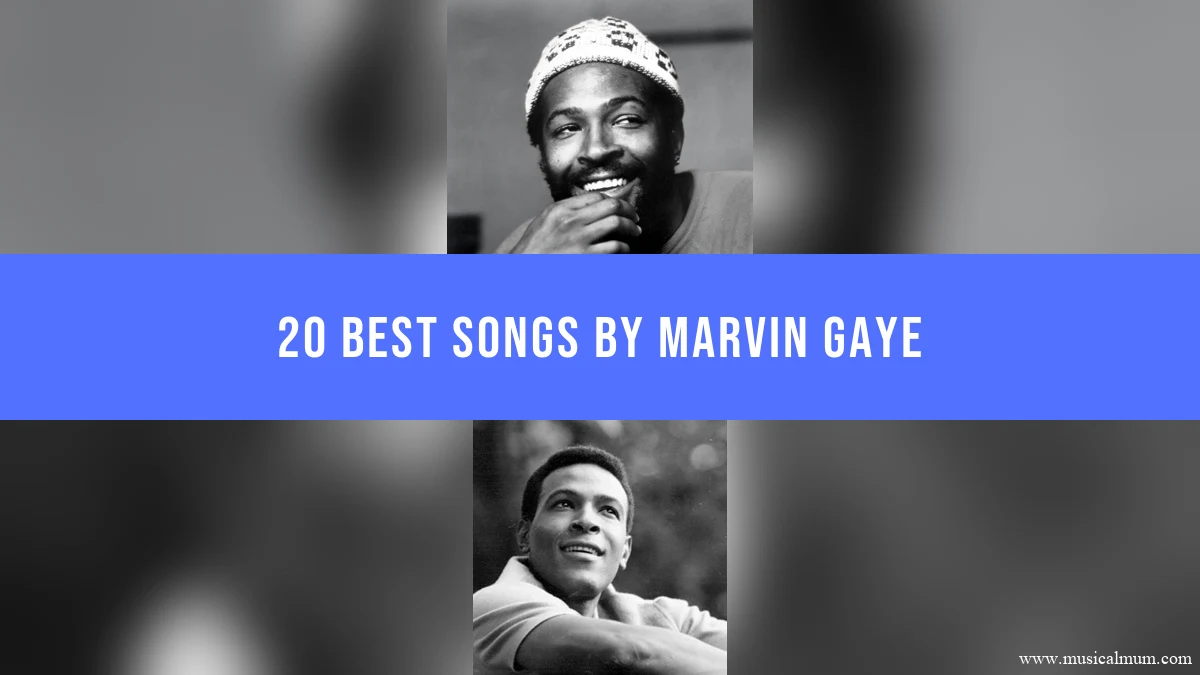
Marvin Gaye’s best songs cover bright Motown singles, affectionate duets, thoughtful soul and relaxed dance grooves. These 20 picks bring those sides together, from “What’s Going On” and “I Heard It Through the Grapevine” to his recordings with Tammi Terrell and Diana Ross.
Start with “How Sweet It Is” for an upbeat welcome, “You’re All I Need to Get By” for a duet or “Inner City Blues” for a more reflective listen. The selection moves between periods of his career so you can hear the range of his voice and songwriting subjects.
Contents
- 1. “What's Going On” by Marvin Gaye
- 2. “I Heard It Through the Grapevine” by Marvin Gaye
- 3. “Ain't No Mountain High Enough” by Marvin Gaye and Tammi Terrell
- 4. “Mercy Mercy Me (The Ecology)” by Marvin Gaye
- 5. “Let's Get It On” by Marvin Gaye
- 6. “Sexual Healing” by Marvin Gaye
- 7. “Inner City Blues (Make Me Wanna Holler)” by Marvin Gaye
- 8. “How Sweet It Is (To Be Loved by You)” by Marvin Gaye
- 9. “Ain't That Peculiar” by Marvin Gaye
- 10. “You're All I Need to Get By” by Marvin Gaye and Tammi Terrell
- 11. “Got to Give It Up (Pt. 1)” by Marvin Gaye
- 12. “I Want You” by Marvin Gaye
- 13. “Stubborn Kind of Fellow” by Marvin Gaye
- 14. “Ain't Nothing Like the Real Thing” by Marvin Gaye and Tammi Terrell
- 15. “Trouble Man” by Marvin Gaye
- 16. “Distant Lover” by Marvin Gaye
- 17. “Can I Get a Witness” by Marvin Gaye
- 18. “Hitch Hike” by Marvin Gaye
- 19. “My Mistake (Was to Love You)” by Diana Ross and Marvin Gaye
- 20. “That's the Way Love Is” by Marvin Gaye
1. “What's Going On” by Marvin Gaye
“What’s Going On” brings a gentle voice to difficult questions about the world. Gaye sings with concern and affection, while the loose conversation around him makes the recording feel like a gathering of people trying to understand one another.
The layered vocals and easy rhythm let the message settle in without a heavy-handed delivery. It is a strong introduction to the thoughtful side of his music and the album that shares its name.
2. “I Heard It Through the Grapevine” by Marvin Gaye
Gaye makes “I Heard It Through the Grapevine” sound uneasy from its first moments. The tense accompaniment leaves him space to question what he has heard, with each turn of the melody adding another shade of doubt.
His voice stays controlled even as the worry grows. Listen to the answering background vocals and the steady pressure of the rhythm; they keep the uncertainty alive all the way through.
3. “Ain't No Mountain High Enough” by Marvin Gaye and Tammi Terrell
Marvin Gaye and Tammi Terrell trade promises with bright, effortless energy in “Ain’t No Mountain High Enough.” Their voices seem to urge each other forward, turning a declaration of loyalty into a lively conversation.
The rising chorus makes it easy to join in, but the little exchanges between the singers are just as appealing. This is the Gaye and Terrell duet, with the quick, buoyant feel of their original recording.
4. “Mercy Mercy Me (The Ecology)” by Marvin Gaye
“Mercy Mercy Me (The Ecology)” sets concern for the environment inside a warm, flowing arrangement. Gaye’s vocal has a worried softness, allowing the images of a damaged natural world to carry their own weight.
The smooth surface makes the sadness more striking. It sits alongside “What’s Going On” as an example of how he could give public concerns a personal, quietly searching voice.
5. “Let's Get It On” by Marvin Gaye
“Let’s Get It On” opens with an immediately recognizable guitar phrase, then settles into a slow, relaxed groove. Gaye sings with warmth and confidence, drawing out the melody as though he has all the time in the world.
The appeal is in the phrasing as much as the famous refrain. His small changes of emphasis give this romantic recording a conversational quality, with the band leaving plenty of space around him.
6. “Sexual Healing” by Marvin Gaye
“Sexual Healing” places Gaye’s familiar warmth against a crisp electronic rhythm. The repeated pulse gives the song an easy forward motion, while his layered voice makes the chorus feel close and unhurried.
It belongs to his later album Midnight Love and has a different texture from the earlier Motown singles here. The song’s adult romantic theme is carried by a remarkably light, memorable melody.
7. “Inner City Blues (Make Me Wanna Holler)” by Marvin Gaye
“Inner City Blues (Make Me Wanna Holler)” gives everyday pressures a restless, circling groove. Gaye moves between sung lines, murmurs and wordless sounds, making frustration feel present in the performance itself.
The bass and percussion keep returning to the same uneasy ground. It is a powerful choice for hearing how much he could express through the texture of his voice, even between the words.
8. “How Sweet It Is (To Be Loved by You)” by Marvin Gaye
Gaye sounds openly grateful in “How Sweet It Is (To Be Loved by You).” The melody has an easy swing, and the bright backing turns the pleasure of being loved into something the whole room can share.
His delivery is generous and playful, with little lifts that keep the familiar chorus fresh. It is an especially welcoming entry point for someone discovering his earlier, more upbeat singles.
9. “Ain't That Peculiar” by Marvin Gaye
“Ain’t That Peculiar” finds the singer puzzled by his own attachment to someone who causes him pain. The brisk rhythm gives the complaint a surprising bounce, with Gaye moving nimbly around the answering voices.
There is humor in the disbelief, as well as hurt. The performance catches that uncomfortable feeling of knowing a relationship is troublesome while still being drawn back to it.
10. “You're All I Need to Get By” by Marvin Gaye and Tammi Terrell
“You’re All I Need to Get By” gives Gaye and Tammi Terrell room to sound both tender and determined. They begin with a clear promise of support, then build toward a fuller exchange as the arrangement gathers strength.
Their voices complement each other without losing their individual character. The sense of shared resolve makes this an affectionate choice for a wedding playlist or a quiet celebration of a lasting relationship.
11. “Got to Give It Up (Pt. 1)” by Marvin Gaye
“Got to Give It Up” creates the sound of a busy room before Gaye’s light vocal takes its place in the groove. The rhythm feels loose and sociable, with small instrumental details keeping the dance moving.
The story follows someone finding the confidence to join in. This Part 1 version keeps the focus on the compact, welcoming stretch of the song, making it a natural pick for a party playlist.
12. “I Want You” by Marvin Gaye
Gaye sings “I Want You” with a soft, insistent longing. The arrangement feels carefully layered, with rhythmic details and backing voices surrounding a melody that keeps returning to the wish for affection to be shared.
He leaves room for uncertainty inside the smoothness. That patient delivery makes the song absorbing at a low volume, when the smaller vocal touches become easier to hear.
13. “Stubborn Kind of Fellow” by Marvin Gaye
“Stubborn Kind of Fellow” shows a rougher, more exuberant side of Gaye’s voice. The beat is brisk, the responses are spirited and his pursuit of a reluctant sweetheart gives the performance its forward push.
The title tells you much about the narrator’s determination. It is an enjoyable way to hear the lively early sound that sits behind the smoother recordings many listeners know first.
14. “Ain't Nothing Like the Real Thing” by Marvin Gaye and Tammi Terrell
Gaye and Tammi Terrell give “Ain’t Nothing Like the Real Thing” a warm, gently swaying feel. The song compares reminders of someone with the comfort of actually having that person nearby.
The idea is simple, and their close exchange makes it convincing. Neither singer crowds the other, leaving the duet with the ease of two people who are listening as closely as they are singing.
15. “Trouble Man” by Marvin Gaye
“Trouble Man” lets Gaye move through a moody, spacious setting. His vocal shifts between a lower, composed delivery and higher phrases that seem to drift above the accompaniment.
The song comes from his soundtrack of the same name, and its atmosphere works even without the film. Its unhurried confidence makes a pleasing contrast to the sharper rhythm of the early singles.
16. “Distant Lover” by Marvin Gaye
“Distant Lover” stretches the ache of separation across a slow, patient melody. Gaye sounds as though he is trying to reach someone who remains just beyond the recording, with each appeal growing a little more urgent.
This studio recording lets the background voices and restrained accompaniment frame his longing. The spaces between phrases matter, giving the listener time to feel the distance he keeps returning to.
17. “Can I Get a Witness” by Marvin Gaye
“Can I Get a Witness” borrows the energy of a call-and-response gathering for a complaint about a difficult romance. Gaye asks for someone to understand his side, while the brisk backing seems ready to answer.
The performance is direct and full of movement. It is a good reminder of the punch he could bring to a short single, using vocal force and a tight refrain to get his point across.
18. “Hitch Hike” by Marvin Gaye
“Hitch Hike” sends its narrator out searching for a missing love. The quick rhythm and bright vocal responses give the journey a cheerful momentum, even though the words begin from a feeling of being left behind.
Gaye’s youthful delivery makes the repeated title feel like an invitation to move. This is one for the lively end of a listening session, with little time wasted before the groove takes hold.
19. “My Mistake (Was to Love You)” by Diana Ross and Marvin Gaye
Diana Ross and Marvin Gaye share the regret in “My Mistake (Was to Love You).” Their contrasting voices bring different colors to a song about looking back on an attachment that has gone wrong.
The arrangement keeps a steady, measured pulse under their exchanges. It offers another side of Gaye’s duet singing, with a more reflective mood than the bright optimism of his Tammi Terrell recordings.
20. “That's the Way Love Is” by Marvin Gaye
“That’s the Way Love Is” sounds like advice offered after disappointment. Gaye sings with sympathy, acknowledging how quickly affection can change while encouraging someone to keep going.
The rhythm has a firm, driving quality, so the consolation never becomes sleepy. It closes this selection with a mix of warmth and resilience that suits his expressive way with a familiar human story.
Featured Image Credits (Top): Jim Britt
Featured Image Credits (Bottom): J. Edward Bailey